
Dear Reader, Whatcha Thinking?
From the Desk of Lisa & Bremond

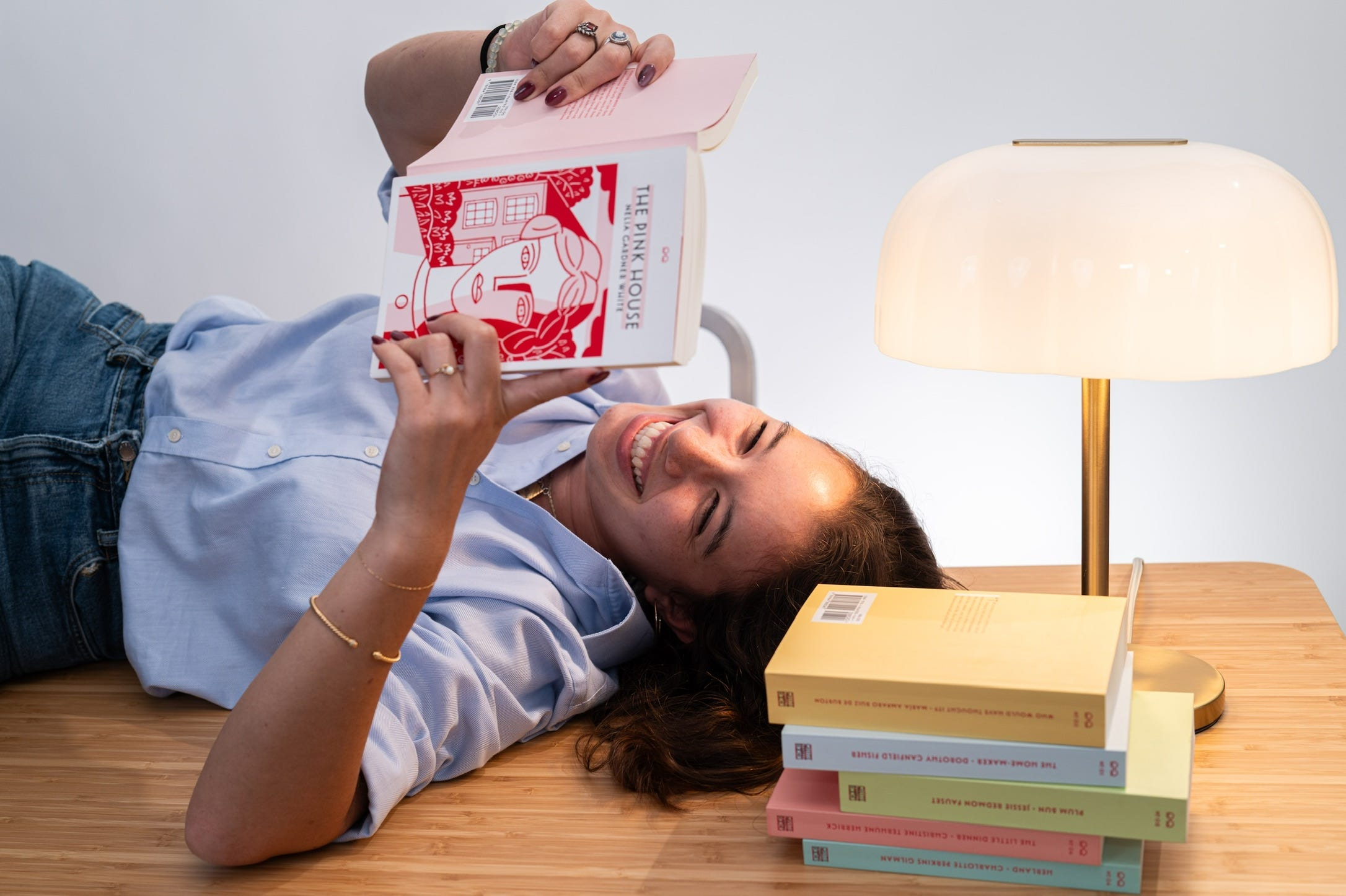
Dear Reader,
We’re writing you today from the opposite coast, that is to say, the west one. Why the dramatic geographic shift? Well, the Los Angeles Times Festival of Books at USC is happening this Saturday and Sunday! General admission is free, and we’ll be there along with so many incredible authors and others of the bookish sort (including Lionel Richie, and Lisa is most excited).
As a mission-driven press, we periodically like to remind ourselves why we’re doing what we’re doing (besides the obvious reason that we enjoy this work immensely).
And while we hope all of our books are a good read, plain and simple, we also believe that there’s much to learn from our collective literary past and from each other as thoughtful readers. In short, a good book from yesterday is a great place to start a conversation today.
Quite Literally Books
That’s a line from our manifesto, but it’s not just a line. Our first books hit the bookstores a year ago on April 7th (happy birthday to us!), and almost immediately, we began to receive notes, DMs, and emails from our readers!
Today, we wanted to share with you a couple of very interesting reader takes on The Pink House by Nelia Gardner White. For those of you who haven’t read it yet, please check out our Pink House Substack post from a few weeks back for a quick and dirty introduction (and pick up your very own copy of QLB No. 3 here!).
First up, we have a lovely letter we received from Jeanne V., a retired librarian who has her pick of books from the library system–and yet chose not only to read The Pink House but also to buy it! Is there a higher compliment from a librarian? We think not.
I knew I was going to love this book from the first page; this was confirmed…when I read and copied, “Hate can be so hot and overwhelming, fear can make such a sickness, love can be so absolute.”
Oh my goodness, we love this quote too.
When I knew I had to read to the end, I waited for a special time when I would not be interrupted…I don’t know when I started to cry, but at the end, I was literally sobbing.
Is there anything better than when a book does this to you? To be honest, Jeanne’s words had us choked up maybe even more than The Pink House.
Since then I have spent time thinking of how this story could do this to me. I still don’t really understand, but for one thing there were so many different characters, ordinary people in ordinary situations, and I loved them all because each one had a hidden challenge. I’ve often thought of Ungar, who walked a mile to work, with sciatic nerve pain, did all the cooking and cleaning, walked home, and was never addressed by her first name or had the honor of being called Mrs. So glad that she finally got her chapter!
I’ve kept the book on the table, where we eat, that also serves as a big (messy at times) desk. I just don’t want to put The Pink House away…It will stay in place until I can let it go, which will take some time.
It’s so wonderful to hear what hits for someone else. This is the reason why we think books have been foundational to our friendship and continue to be a deeply felt connection point. Yes, we talk about our lives, our longings, our families, our fears, but sometimes, it’s that nameless, unexpected reaction to a book that opens the door into something that’s tucked away in spaces inside us we didn’t even know existed.
Thank you, Jeanne! We can’t wait to continue the conversation with you. Also, Jeanne mentioned she heard of us through Devoney Looser– if you’re a Jane Austen fan, you may already know her and her considerable work. If you don’t, may we suggest, dear Reader, that you get yourself over to your favorite book shop (here are some of ours) and pick up her latest, Wild for Austen: A Rebellious, Subversive, and Untamed Jane, which we can personally vouch for as a great read. You can also find Devoney aka Stone Cold Jane Austen here on Substack!
Okay, now for another conversation about The Pink House, this time, with Anna V., gently calling us in:
In the blurb for The Pink House, you describe Norah as ‘confined to crutches’. From my perspective, and that of many other disabled people (though not all), describing a disabled person as ‘confined’ or ‘bound’ to their mobility aid feels inaccurate. For many, mobility aids such as crutches, canes or wheelchairs actually represent freedom…
Anna had honed in on a phrasing we struggled over– if you’ve read The Pink House, you know the book chooses a very different word to describe Norah’s disability, and we went back and forth as to how we should modernize this language for the blurb. In the end, we settled on wording that had a pleasing alliteration, without any understanding of the broader implications of “confined” in conjunction with a mobility device.
…[W]ithout her crutches, Norah would not be able to move about the Grange and beyond independently. Before she experiences ableism from the Dickinsons (and sadly internalises it), she sees the crutches simply as a part of herself, not as something negative. It is without them that she is confined: we can see this when Jed grabs her new crutches and she is left stuck on a bench for a long time, waiting for him to give them back.
The crutches are so much a part of the difficulties Norah has to negotiate, both internally and with everyone at the Grange. It’s at the very moment when her crutches slip while walking into the Grange for the first time and Aunt Rose catches her that Norah understands (as do we) that her life has irrevocably changed.
Being in conversation with Anna made us realize that it’s practically an oxymoron to be “confined” to a mobility device. So that was a miss on our part, and we apologize for our ignorance in this regard.
We still have quite a few copies of The Pink House on hand, so a reprint with a reworded blurb isn’t something we can do right away. In the meantime, we’re so glad to have this new understanding, and we changed the blurb where we could (on our website and anywhere and everywhere it’s digitally printed). It now reads:
When seven-year-old Norah’s life is upended by the death of her mother, she’s sent to the Grange to live with her icy Aunt Rose, absent Uncle John, and four casually cruel cousins. Thank goodness for her (not quite literally) Aunt Poll, who takes Norah under her prickly-but-kind wing—but even with her straightforward guidance, it won’t be easy to fit into this family. Norah must learn to navigate her new circumstances, relying on her crutches to get about and her powers of observation and intuition to unravel the secrets that torment the inhabitants of the Grange.
Revised blurb from The Pink House
Of course, we wish we could always get it right the first time, but that’s clearly not happening. We’re grateful that a reader would take the time and care to bring an important point to light. It’s kind and generous. And it’s exactly the kind of engagement with readers –and texts– that we were hoping for when we started Quite Literally Books. The work we do is both incredibly gratifying and also, we’re discovering, quite tricky as we think through why we bring back the books we do and how best to engage with modern, discerning readers over troublesome texts, the history associated with them, and the complicated people who wrote them.
But here’s the best part– and the reason we wanted to share these two stories with you.
This, dear Reader, is the community you are a part of when you sit down with a Quite Literally Book. Thoughtful and intentional readers who are committed to meeting people and books where they are and sharing perspectives.
If that doesn’t have you dancing into the weekend with us, well, it may be time to put on some Stevie Wonder. Lisa suggests warming up with “As.” Bremond says follow that up with “You are the Sunshine of My Life.” Sing along loudly.
Happy reading,
Xx LiBer
P.S. And don’t forget, if you happen to be in the LA vicinity, please stop by to say hi and meet our books in person at the Los Angeles Times Festival of Books tomorrow and Sunday! :)
P.P.S. If you want to know what we’re up to daily, follow us on Instagram!
I really appreciate your openness to listening to the disabled POV. Thank you for sharing that conversation and growth!